Do you have a domain and now want to make various applications or addresses accessible under it? For example, a blog, store or intranet - then a subdomain is the way to go. A subdomain can be compared to an apartment within a house - the domain itself is the address of the house, while the subdomains represent the addresses of the individual apartments within it. This makes it possible for a subdomain, e.g. for http://www.IhreDomain.at, to refer to a different content of your web space than you do with your main domain http://IhreDomain.at. However, you can also redirect your domain to a completely different domain - for example from http://IhreDomain.at to http://IhreZweiteDomain.tld.
For the sake of simplicity, the Apex domain itself - i.e. http://IhreDomain.tld - can also be managed in the subdomain menu and is sometimes referred to by us as a subdomain.
Both the Controlpanel and the Cloudpit offer a variety of options for managing these sub-addresses, but the interface used for this is slightly different. The following describes how you can manage your subdomains in both systems.
1. subdomain management in the control panel
Under [Web Hosting] and [Subdomains], you have the option of configuring the entries of your domain for different web content.
To create a subdomain, please navigate to [Web Hosting] and [Subdomains] and then click on [+Add new subdomain]. A text field will appear below where you can create the desired entry or subentry.
If you want to configure the domain yourself (without www or similar), please leave the text field empty. On the next page, you can specify the forwarding options for the entry you have just created. Please note that the respective entry or sub-entry such as www. must be created as an “A” record under [Domains] and “DNS” and configured to the IP address of the easyname web server.
Under [Web hosting] → [Subdomains] you can choose from the following display options:
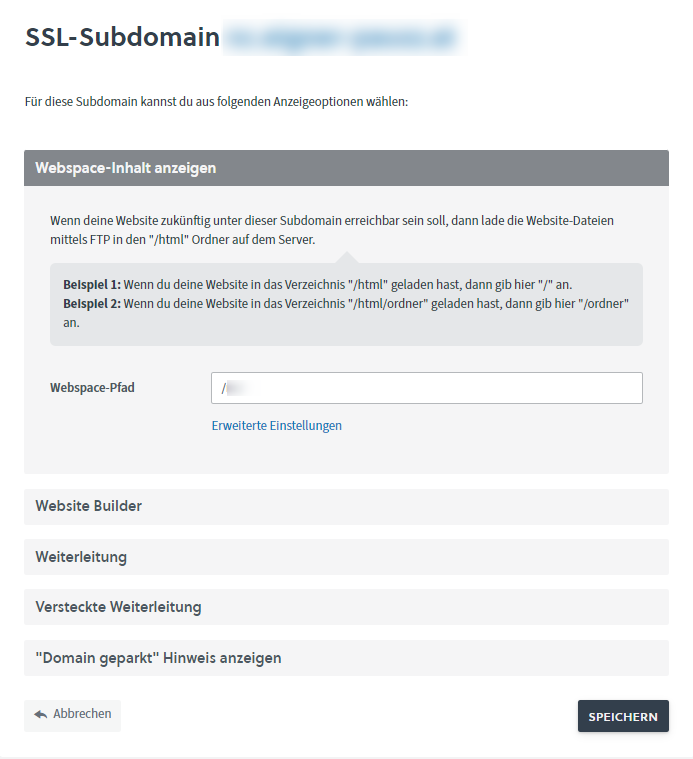
1.1 Display webspace content

If you want to display your website under this subdomain, upload your files to the “/html” folder on the server using FTP. The path “/html” no longer needs to be specified here. Example: You upload your website to the “/html/folder/” directory, then enter “/folder/” here.

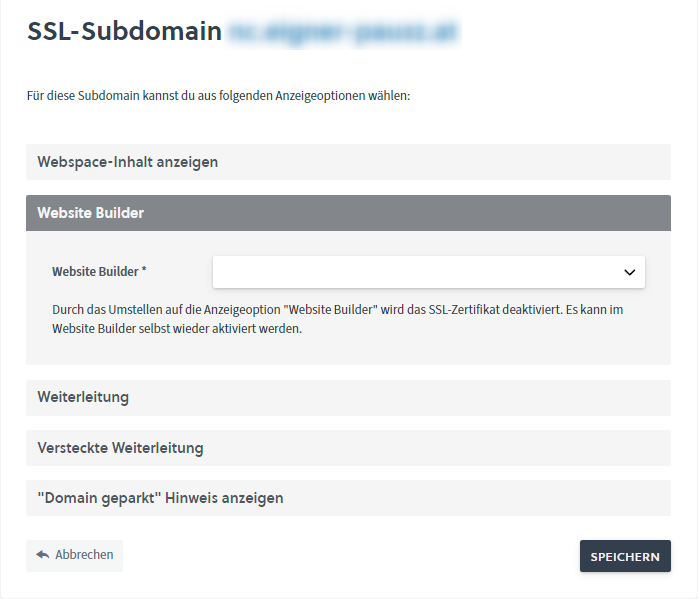
If you have booked a Website Builder with us, you can use this type of forwarding to make your Website Builder website accessible with the respective (sub-) domain.
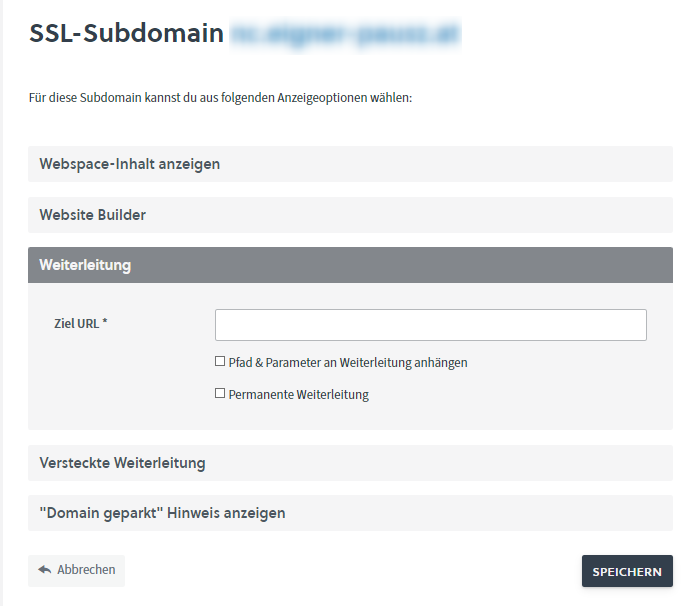
1.3 Forwarding (normal)

Normal forwarding allows you to forward your domain to another domain name. However, the “real” Internet address of the website to which you are redirecting appears after the redirect.
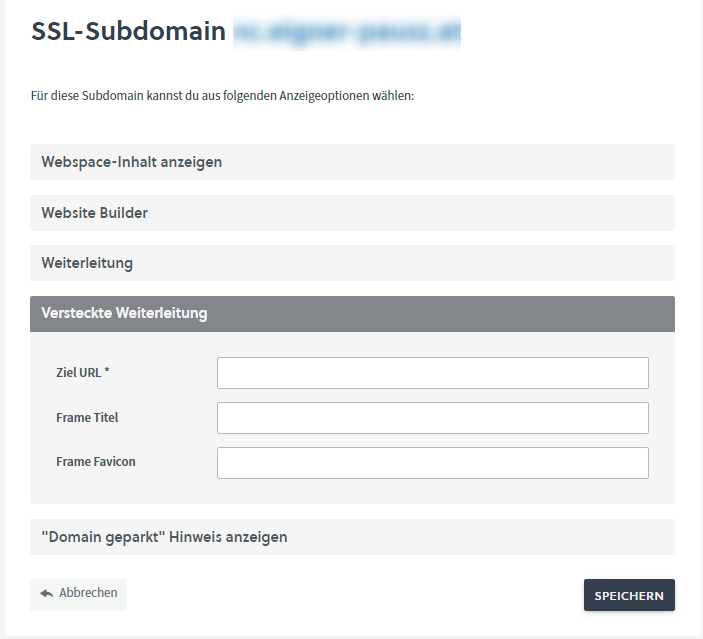
1.4 Hidden forwarding (frame)

Hidden forwarding gives you the option of forwarding your domain “hidden” without displaying the “real” Internet address. This is a so-called frame forwarding.
1.5 Show “Domain parked” notice
This allows you to display the website placeholder “Domain parked at easyname”.
2. subdomain administration in Cloudpit
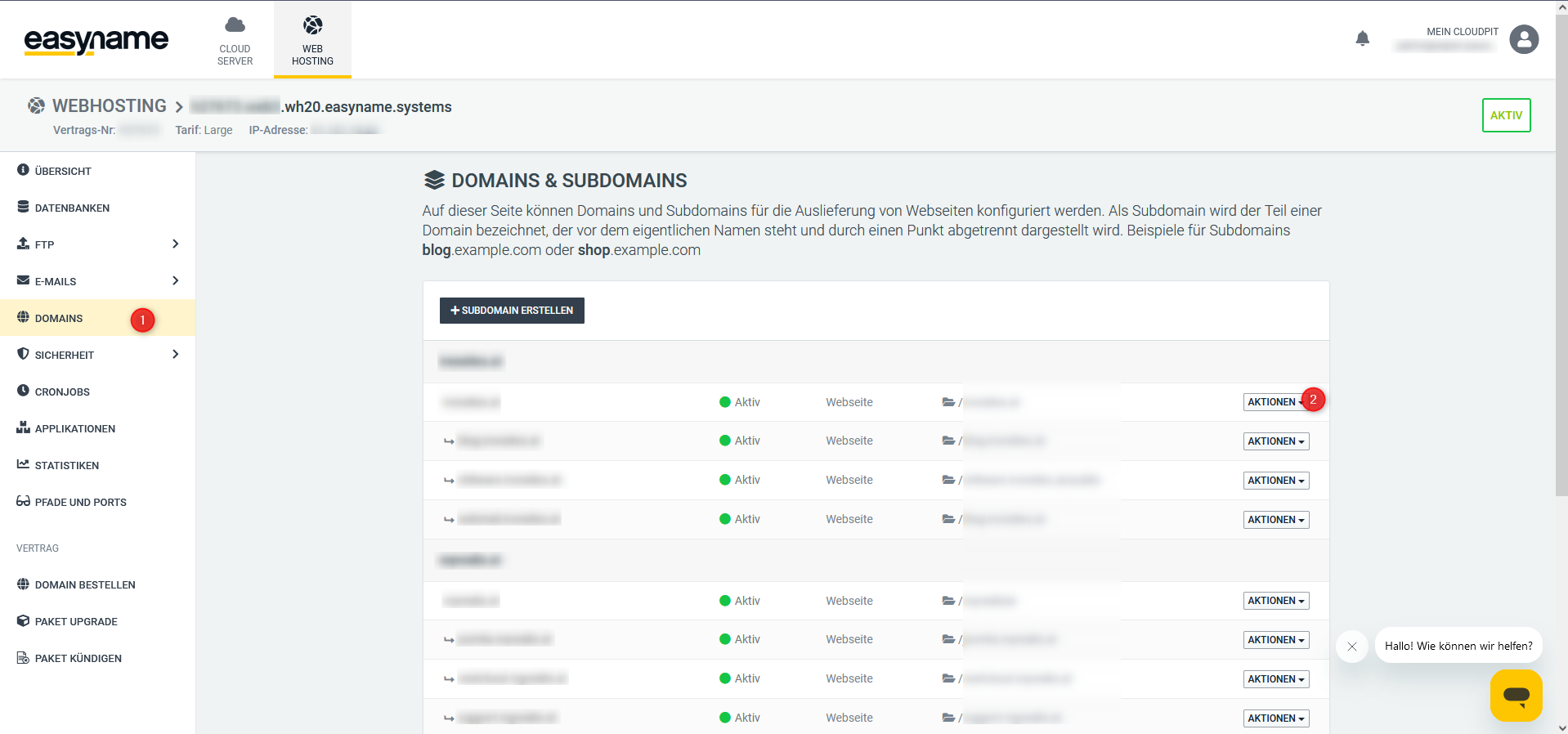
First navigate to the web hosting administration interface and click on the [DOMAINS] menu item. Click on the [ACTIONS] button next to the desired (sub-) domain.

2.1 Displaying the contents of the web space

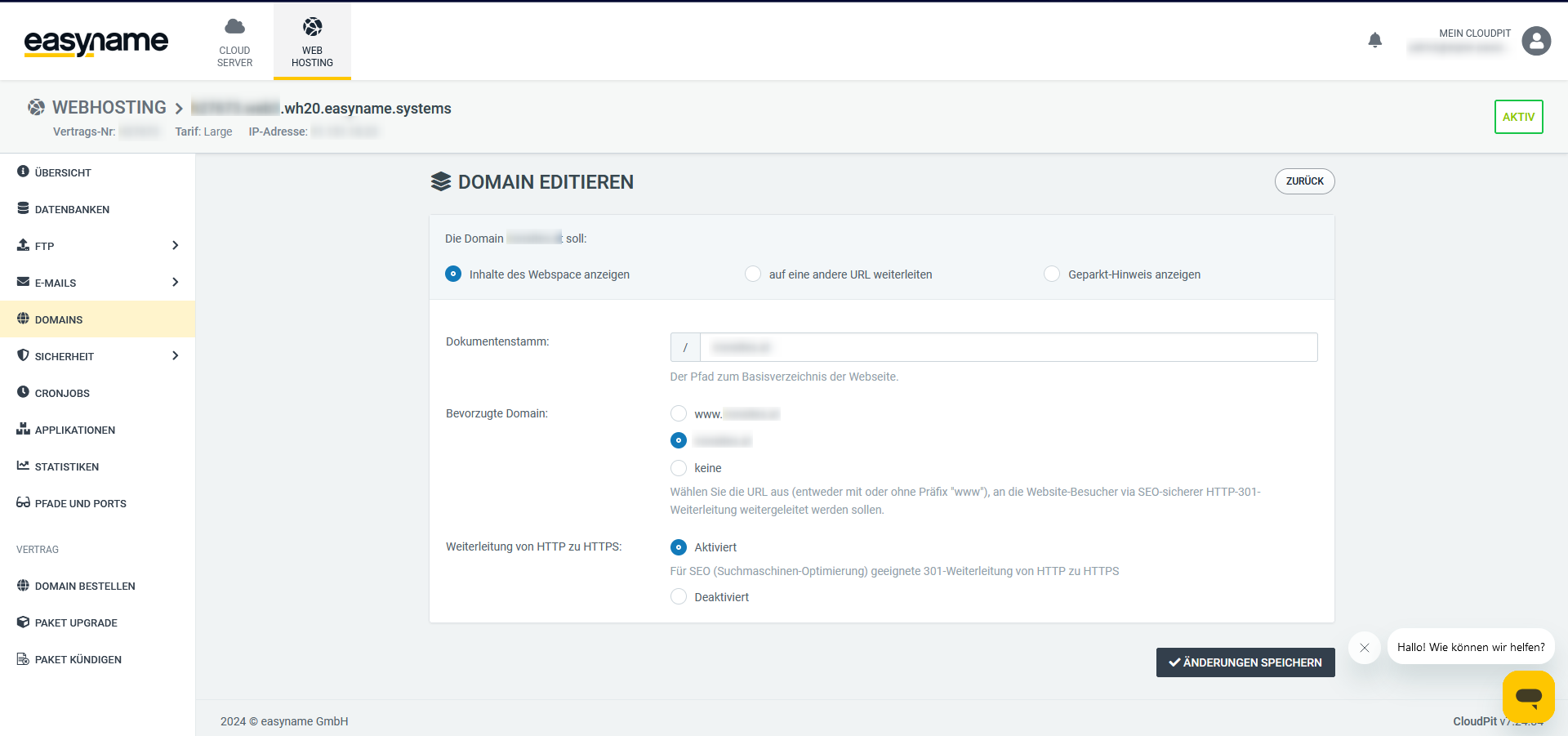
If you have uploaded your website to our web space, you can then point the subdomain to it using the [Show web space content] option. Please ensure that you enter the complete path.
You can also select the preferred domain at this point, which is particularly interesting for content from the Apex domain. This means that the web server either automatically delivers the apex domain, the www subdomain or the (sub)domain as it is to the visitor.
Finally, you can automatically redirect web page requests from the unencrypted HTTP version to the encrypted HTTPS version. This type of redirection makes sense in terms of better search engine rankings, generates trust in the reliability of the website among visitors and should generally be set.
2.2 Redirect to another URL

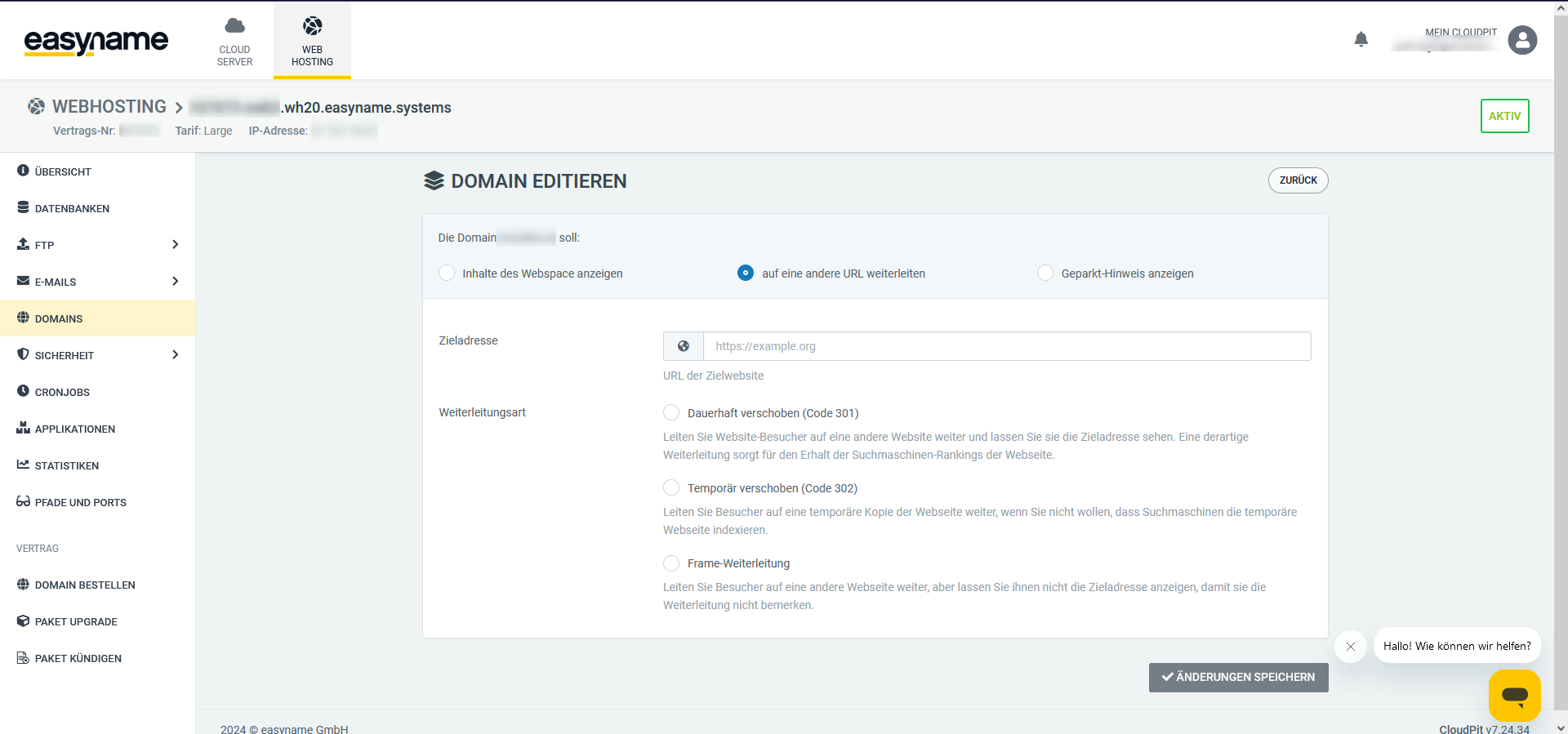
If you want to redirect your domain to another website, you can do this with the [Redirect to another URL] option. There are three types of forwarding available to you.
Permanently moved (code 301) - Redirect website visitors to another website and let them see the destination address. This type of redirect ensures that the website's search engine rankings are maintained.
Temporarily moved (code 302) - Redirect visitors to a temporary copy of the website if you do not want search engines to index the temporary website.
Frame redirect - Redirect visitors to another website, but don't show them the destination address so they don't notice the redirect.
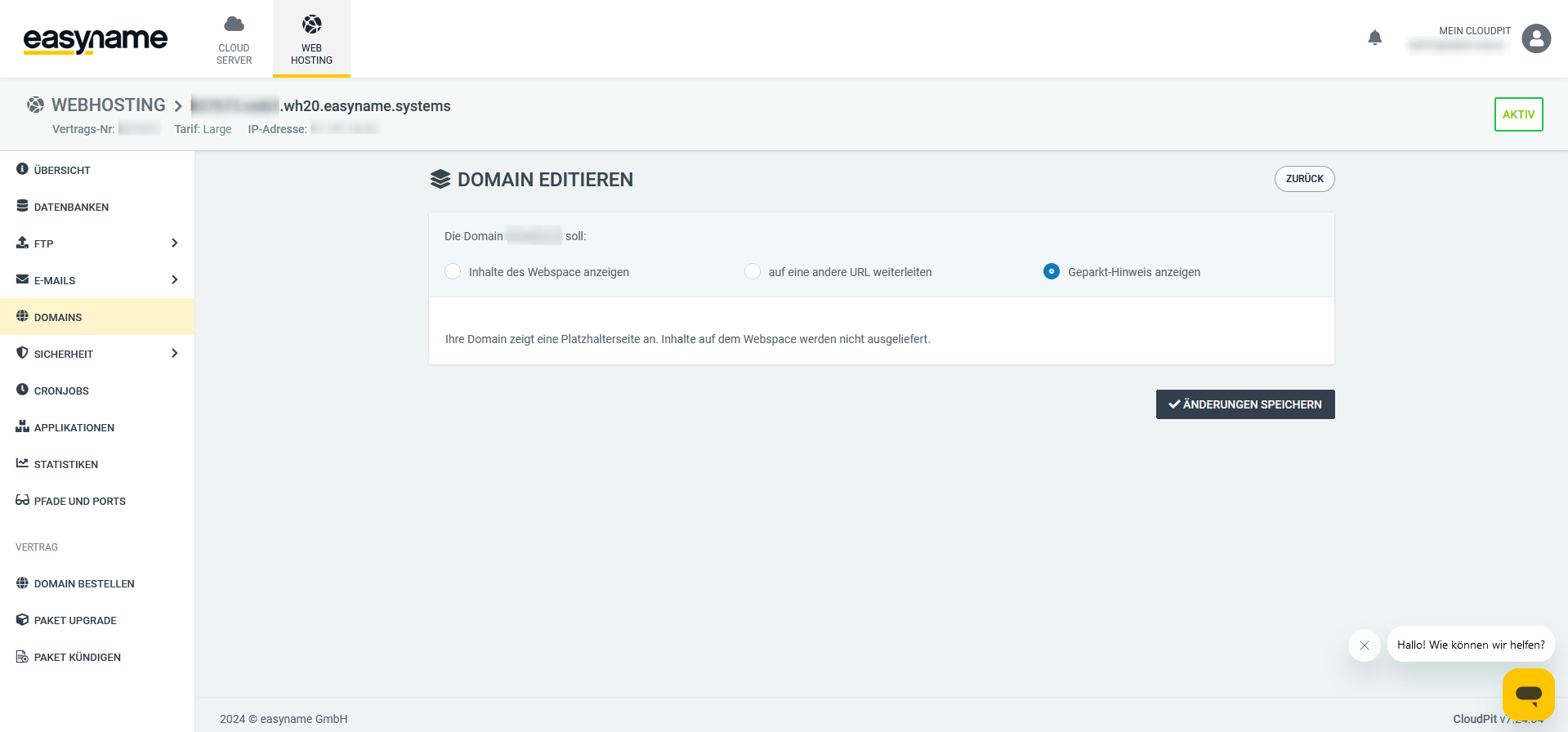
2.3 Display parked notice

If you have saved a new domain, it displays a placeholder page by default. Sometimes it can be a good idea to temporarily switch back to a placeholder page - during maintenance, for example.